Selasa, 26 Agustus 2008

Lying On The Garden Insects Do


Spring is a wonderful and thrilling time, with innovative and lovely flowers universally.

Spring is a perfect and moving season, with brand-new and wonderful flowers the world over. A period boosting the chi with new flowers signs of life far and wide, spring is welcomed with wholehearted joy.The principal spring flowers are symbolic of new beginnings after a flower long ending spell. These flowers usually spring from the ground that is static immobile and may on a par bloom before the flowers snowfall melts. Such flowers welcome the spring term and are considered special. Daffodils, the narcissus with white and pallid flowers flower and the hyacinths with minute blue-dyed flowers are among the early spring flowers. Other flowers of the time of year enter the flower long-lasting tulips and irises, cherry blossoms, poppies, roses, violets, forsythia, amaryllis, cyclamens, freesias, lilies, chrysanthemums, sunflowers, and asters.

Spring flowers enhance flowers the beauty of the environment with their as like as chalk and cheese shades, shapes, and attractive insignia, which diverge from white to violet. Most flowers spring flowers arrange a satisfying smell. Many spring flowers are grown from bulbs. These bulbs are placed in holes with flower the keen ends upwards and then shielded and watered. If the mood is too impersonal, the bulbs can be secure flower using mulch, which is kept over the bulbs.Spring flowers are cool as they make better one\'s day with flag and hopes. flowers They are messengers of kindliness, decadence, love, and concern. Spring flowers are able-bodied suited as gifts for anniversaries, graduations, birthdays, flower Mother\'s Day celebrations, Easter, and bridal procedures.Spring flowers make alluring centerpieces for tables and digs. Bridal bouquets can be set flowers with them. There are a integer of online florists and flower head shops that provide energetic spring flowers and spring elite flower baskets.Spring Flowers provides complete facts on Spring Flowers, Spring Wedding Flowers, Names Of Spring Flowers, Spring Wild Flowers and more. flowers Spring Flowers is affiliated with Fresh Flower Arrangements.

Rose Gardening


Roses have all times been appreciated for their beauty and elegancy. Since ancient times the rose is the symbol of love and prettiness. They were even identified with various goddesses of love like the Greek goddess Aphrodite or her Roman equal Venus. In Europe rose gardening was established in the 1800s, after perpetual blossoming roses were imported from China.

But in the course of time roses’ reputation has gotten a bad change for being hard to grow and maintain. If you are thinking about rose gardening don’t let this myth stop you. While rose gardening can prove to be ambitious, once you master it, it really isn’t that bad.


When you first start rose gardening, you will have to pick out what type of rose you want to plant, and no, I’m not discussing the color. You will have to choose between bare-root, pre-packaged, and container-grown roses. Bare-root roses are sold in the winter and early spring. They should be planted as soon as frosts are over and the ground is warm and workable. Pre-packaged roses are bare-root plants that are sold in a bag or box with something around the roots to keep wet, like sawdust. Container-grown roses are grown; you guessed it, in containers. They will be either budding or already in flower when they get available in the early spring.

Planting in rose gardening is not that much contrary to any other type of plant. The most significant thing, as ever, is good, healthy soil and a quality planting area. It doesn’t matter whether your roses are bare-root or container-grown, the planting ways are just as any other shrub. Make sure the spot you pick out has good drainage, gets enough of sunlight, and will not overcrowd your roses. Ahead of planting, any dead leaves and thin or rotted shoots need to be cut off. Any damaged or very long roots also need to be cut back. Soak bare-root roses in water about 10-12 hours to restore moisture in the roots before planting and water the soil before planting also. Make sure the hole you have dug is big enough for the root growth of the rose. Also it is a good idea to use compost or mulch. After all, roses like additional nutrients just like any other plant.

Roses ask for the same things as other plants; they are just a little needier. One of the most important things to think of in rose gardening is that roses are heavy feeders and will ask for numerous fertilizer applications. Fertilizing should be started in early spring and stopped in early fall. Be sure not to over-fertilize (fertilize should go with directions) and water after each feeding. Roses want big amounts of water; a exhaustive watering twice a week should be adequate.

Pruning is an necessary part to flower gardening. It increases blossoms and advances healthy plant growth. Different assortments of roses have different directions for pruning, so you might want to read up on your rose types and see what is indicated.

The main thing to recollect in rose gardening is to water, water, and water some more. One extra thing about rose gardening is the amount of fertilizer and nutrients you will need to use, and the pruning that needs to be done to keep your roses under control and healthy. Although rose gardening asks for a little more time and roses are more work, they are one of the most unique and beautiful plants, and unquestionably worth the additional work.

Senin, 25 Agustus 2008

Edible Garden Flowers


Violets are not the only flower that can be candied. Many spring flowers with small, delicate blossoms have a sweet, somewhat spicy flavor that is enhanced by dipping them in sugar. It goes without saying that any flowers that you gather for eating should have been grown without the use of pesticide - by growing them yourself, you can be sure that they're untreated. A Candy Fleurist Garden that blooms throughout the summer can include:


Violets - Purple, blue or white, violets are among the first flowers to bloom in the spring. They spread easily, and grow happily when transplanted into a garden bed - and you do want to confine them to a bed unless you love the look of a full carpet of blooms spreading across your lawn.

Pansies - A relative of violets, pansies are just as delicately flavored and can be used as a substitute in recipes that call for violets. They make beautiful border flowers to boot.

Angelica - These delicate, lacy white flowers can be sprinkled in salads - but the stems and shoots make a delicious traditional candy that tastes a bit like licorice with a hint of mint.

Roses - Candied rose petals and rose syrup were mainstays in Victorian cooking. Sweet delicately flavored rose syrup gives baklava its characteristic flavor, and is a perfect foil for cardamom in Indian recipes.

To candy flowers from your garden: Violets and pansies can be candied whole. Roses should be separated into petals. Most recipes for candied flowers call for the use of raw egg whites. Using a confectioner's powdered egg white instead reduces risk of salmonella.

Mix powdered egg white according to package directions (equivalent of one egg white). Spread a cup of superfine sugar in a flat bottomed pan. Carefully dip each flower into the egg white, then press into the sugar. Use a fork to gently turn the flower so that all surfaces of the petals are covered. Lift out of sugar and lay on a screen or drying rack till completely dry. Apple and cherry blossoms can also be candied the same way.

A Soup, Salad and Savory Flower Garden Early summer squash blossoms may be dipped in egg and flour, then fried in olive oil with garlic. The blossoms have a sweet, nutty flavor that is like nothing else. Other garden flowers that are delicious in soups and salads include:

Borage - Like the leaves, borage flowers are delicious in salads and cold soups. They have a cool, cucumber like taste that translates well from flower garden to kitchen table.

Carnations - The flavor is as spicy as the scent. Carefully separate the petals from the bitter white of the flower's base and sprinkle in salads for a surprising touch of color and spice.

Daylilies - Like squash blossoms, day lilies have a mildly sweet, nutty flavor that many people think varies by color. Dredged in flour and dipped in egg, fried daylilies are quite succulent and unique in flavor.

These are just a small sampling of the many edible flowers from your garden. Be careful in your taste-testing. If you are not sute if a flower is edible do not eat it.

5 Tips For Building A Beautiful Garden Shed


re you sick and tired of reading articles which promise you to show you how to build a shed but never deliver their promise? Instead of that you just get recommended the next super cool kit that you should buy? I know how you feel. That's why I am not going to recommend you anything to buy. I'll just give you five simple tips that will help you build your beautiful garden shed on your own - no matter if you are using a kit or not.

1. Forget about the fashion
When you browse the web stores that sell sheds you will notice the same models popping up everywhere as "the best" and "the cutting edge". If you turn around in the gardening, home improvement and do-it-yourself related forums, you'll see the same models being praised and discussed.


My advice is to ignore everyone who tries to make up your mind. Fashion is temporary, your shed will be there for years. You are going to put days of hard work into building your shed, so why don't you just pick the one that suits your personal taste and needs? Just don't let others tell you what kind of shed you should build - listen your own heart and needs.

2. Build it on your computer first
Yes, you heard me right. Get a program like Google SketchUp and design your garden along with your shed there. This will let you visualize much better the position and the look of your future shed. Based on the 3D model you can decide if you want this type of shed or another one.

Of course learning to work with such a program takes some time, but my advice is not to go into too much details. Just roughly design the shed and yard by learning only the basics of the program. This will be absolutely enough for you to decide on the best model.

3. Paint it
Why so many people leave their sheds with the original colors of the materials or kit? Even the simplest shed can look amazing if painted creatively. Just be careful not to use too many colors and make it look like a child's play.

Hint: use paints that survive long time under sun and water. Your shed is an outside building so don't forget this.

4. Make improvements to the shed plans
If you are qualified enough to build your shed by using just shed plans, then you must be qualified to make improvements to the plans as well. Why should you follow the creator's ideas if you don't like them? Just go ahead and fix whatever you want. Be careful not to get wrong sizes or to waste too much materials.

Of course if you are building your shed from a kit, this option will not be for you.

5. Arrange plants around the shed
The shed is just a simple building and cannot look like a castle. If you run out of ideas how to improve its look and feel, just find the possibilities outside of it. Arranging interesting plants and trees next to the shed, growing ivy to creep on it and putting a small pathway to it can make your shed look fabulous.

You see, you can have a beautiful shed even without investing much money and efforts. It all comes down to creativity and listening your voice.

Business Of Organic Gardening


Organic gardening is growing and marketing health foods that have not been treated with commercial chemicals. Only natural fertilizers and pest repellents are used to qualify for the higher, health food prices.

The primary equipment for health food growing is to not use the chemical fertilizers or toxic pesticides. Natural and organically grown foods command higher prices because they cannot easily be mass-produced and generally require more TLC.


Not only are natural foods more expensive, they are mandatory for people who cannot tolerate many of the chemicals commonly used by the majority of growers today. There are also many people today who feel very strongly about chemicals and are willing to pay extra for all natural products.

The organic grower screens pests from the garden, uses insect repelling plants (like marigolds) and natural enemy insects (praying mantis, ladybugs) and natural, nontoxic pesticides to reduce crop damage.

Some organic growers confine their operation to green houses or shade houses, where control is easier.

Natural foods include fresh fruit and vegetables, dried, frozen or canned foods, as well as seeds, powders and juices.

They can be sold through health stores, directly from your garden roadside stands, or to markets in the area. It is also important to note that processed natural foods are equally as much in demand.

When advertising your organically grown produce, be sure to emphasize the "all natural" aspects, which is one of your best selling points.

Setting up to grow health foods is very much like readying a normal garden, except that you take special care to avoid the use of "forbidden" chemicals.

Fertilizers are restricted to barnyard products and natural plant leftovers which can be combined into an excellent (and low cost) garden fertilizer.

In the natural food garden business, you will soon develop a routine to make your own compost almost exclusively from waste products, plant trimmings, and fruit hulls. All plant parts that are not otherwise used (or diseased) are recycled into compost, along with other materials that you have on hand or can buy inexpensively.

The degree of isolation needed for an organic garden depends on its location. If you live in a hot area, consider a shade cloth enclosure to screen insects as well as the direct rays of a hot sun.

Greenhouse enclosures are often used in the more temperate areas where frost is a consideration.

If your garden is in a relatively insect free and not down wind from fields that are sprayed with commercial chemicals, you may need no special considerations other than some of the accepted insect deterring techniques.

Perhaps the most needed assistance for your organic garden will be compost, which is sometimes called (ironically) artificial fertilizer.

The purpose is to fertilize and simultaneously, add humus (decayed animal and plant matter) to your growing medium.

Depending on the needs of your soil, it may be necessary to add specifics to attain the desired composition.

If you cannot test it yourself, take several small samples from different locations in your garden and have them analyzed.

State universities and some large (especially, chain) nurseries will often provide this service at little or no charge. Call your county agriculture agent to find other sources of soil analysis (and remedial actions that may be unique to your area).

In a commercial operation, you will undoubtedly want to generate at least some of your own compost. You should have at least two compost piles so you can be using one while the other is "working."

One way to build an inexpensive compost box is to make an enclosure of wood and chicken wire, some 3 feet wide, 15 feet long and perhaps 4 feet high.

Use metal or treated for the four corners and re-enforcing posts every 3-4 feet on the sides. There should be no bottom (just bare soil).

Add the compost materials: dry leaves, grass clippings, cotton hulls, straw, fruit peelings, sawdust, vegetables, and manure (clean sacked is fine) in one foot layers.

Kitchen scraps are usually avoided because they give off odors and attract flies, as are any diseased plant parts. Mix in a shovel full of regular garden soil here and there, along with some hybrid earthworms if available.

Between layers, sprinkle well with some 8-8-8 or 5-10-5 commercial fertilizer (about a pound per square foot of compost surface).

This small amount of commercial chemical doesn't count as a directly applied chemical. It acts as a catalyst to speed the decomposing action.

Keep the compost pile moist and use a fork to turn and stir the material every few days to help foster decomposition. Add more clippings as the pile shrinks (decomposes).

When restarting a compost pile always leave a couple inches of the old compost on the ground to act as "starter". Depending on the weather and how well you take care of your compost pile, it should be "ready" in 6 to 8 weeks. Of course, if you use heavier products, such as wood that has gone through a compost machine, it will take a little longer.

Tip: If you can't afford a compost machine, put leaves and other small clippings into a clean metal garbage can and insert your weed-eater. This won't work with larger pieces, but does fine with the light material.

Another idea is to mount a barrel so it can be turned daily. Have one made with a door and good latch so it can be turned without its contents falling out. The barrel can either be mounted on rollers or have axles welded on each end and fit into receptacles on a sturdy stand.

Organic gardeners learn which insects and garden denizens are helpers and which are "bad news". Some may look bad but do a lot of good.

Examples are garden snakes that eat mice and insects, spiders and eat insects, wasps that each roach eggs and lay their eggs in insects, dragon flies, and ground beetles and caterpillars. Other beneficial creatures may be more easily recognized: praying mantis (insects and aphids), lady@bugs (aphids, scales, spider mites), bees (pollination), lizards (large quantities of insects), frogs, toads (ditto), pirate bugs (mites, eggs and larvae of other insects), birds (worms, bugs), dragonflies (flies, mosquitoes, etc.).

There are also "organic" pesticides that are used, but one must be very careful not to step over the line to toxic chemicals and lose their "organically grown" label!

As you learn more and more about organic gardening, you will discover many other tricks that work in your area. Some are iron@clad rules; others may be debatable, but in the final analysis, what works for you is best for you! Some organic gardeners NEVER plant anything in the same row twice, to reduce the possibility of pests and disease.

For example: Tomatoes are especially sensitive to nematodes (root insects) as well as tomato worms. A crop of tomatoes may be followed by onions of cereal (not regular winter) rye for a winter green fertilizer (turned) under in the spring).

The latter is reputed to kill nematodes which become tangled in the thick rye roots. Many organic gardeners routinely place marigolds and other insect repelling plants between rows and/or 5 castor beans to help repel flies and moles.

By subscribing to a good organic gardening magazine, and trial and error in your particular locale, you will soon become an expert for the products you raise.

Herb and Vegetable Garden Landscapes


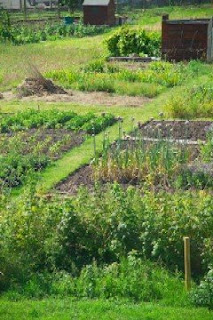
A herb or vegetable garden can make a very attractive addition to any landscape. Herb and vegetable gardens, be they stand alone or, incorporated into the overall landscape, can be just as attractive as many of the common annual and perennials found in most gardens.

Herb and vegetable gardens, be they stand alone or, incorporated into the overall landscape, can be just as attractive as many of the common annual and perennials found in most gardens. An added bonus, is the fact that you can eat most of them as well. This is called an 'edible landscape'.

Stand alone herb and vegetable gardens, are just that. An area is set aside purely for the cultivation of these plants. Stand alone herb and vegetable gardens can be made into any shape and or size. The important thing is to keep in mind how it fits in with the rest of the landscape. Generally speaking, if this is to be a show-piece, then nice lines and an overall neatness is to be desired. Certainly this can be achieved by bordering the garden with largish rocks, however, this can be a problem if the garden is laid in the middle of a lawn. The encroachment of the lawn (especially if it is couch, twitch or kikuyu), will grow under the rocks and you will have a constant battle to keep the lawn out of the vegetable garden. A better solution would be to border the garden with landscape logs, such as railway sleepers, or heavy treated planks. This way, at least you can trim or spray the edges periodically to address the encroachment problem. Yet another way would be to make the lawn of chammomile. Non-invasive and although a lot of work to get established, once it's up and running, it's just glorious. Smells wonderful and has a calming effect on most people.

One exciting method of incorporating herbs and vegetables into your landscape, is to plant them randomly, slotting them into any available space. The only drawback with this method is that in order to have a bunch of vegies for a meal, you must go and find them. None the less, if you were to plant them in small groups, of say 6 to 8 plants, at least then you don't have to hunt for a meal. Vegetables such as corn must be planted in large groups though, as corn relies on the wind for pollination of the cobs, having one plant here and there will see a failure of the crop. Plants of the pumkin family, unless dwarf varieties, should be planted sparingly as they have a tendency to take over. Choko vines can give a very 'jungly' type effect and also have a tendency to smother everything in site. So, unless you really, really, love chokos, I would only plant one.

Many herb varieties make excellent ground covers, keeping the moisture in and the weeds out, with the double bonus of being edible with the lovely aroma. Herbs and a great many vegetables canalso be successfully grown in flower boxes and decorative pots, thereby giving the opportunity for a constantly changing outlook, merely by moving the pots and boxes around.

By the way, you don't have to eat the produce. You can just utilise them as an interesting feature, keep tending and replacing them as needs must - however, I find this would be a criminal waste of an important food resource. Fresh herbs and vegetables - doesn't get much better than that!

Minggu, 24 Agustus 2008

Backyard Garden


Now that spring is here, it's time begin selecting the best plants and flowers for your garden. But before you do, have you ever been guilty of buying plants on impulse only to discover after planting them they look like the forgotten step child, making your garden look ackward? The goal of this article is to teach you how to plan a backyard garden...right now.

Step 1 - Starting with a Solid Plan

Take the time to assess your garden environment. Determine how much sun and shade your garden gets. What type of soil do you have? Is it the well draining type or does it get waterlogged easily? Take note whether your garden is sheltered or exposed to the sun and wind. Now that you have completed your homework, it's time to buy the best plants for your situation.

- Tips at the nursery:

Remember shade-loving plants need a sheltered area, plants that love the sun thrive in warm spots, drought-resistant plants can should be located either in sunny or shaded areas and don't forget that swamp plants are terrific for the poorly-drained areas of your garden.

- Soil Testing

I recommend testing your soil first, to determine the pH level of your soil and what type of nutrients you need to add is a good idea. You want to find out if the soil is acid or alkaline. There are inexpensive testing kits available and it's not very difficult to do. Most plants prefer soil that is slightly acidic, but there are some that must have alkaline soil to grow. You can alter the soil's pH level, but it's much easier to simply plant for the soil you have.

- Design your layout

As you are planning your new garden how will you organize your plants and flowers? Will you group them or will they be random? Grouping your plants create a sense of organization and can be pleasing to the eye especially with vivid colors. On the otherhand, random planting if done with a natural look can also make your garden look quite beautiful.

- Experiment with your design

Now that you are ready to begin planting, put your chosen plants around the garden bed and step back to see how they will look. Experiment and move them around until you are satisfied. By grouping plants in small sets of threes or fives can visually look better than groups of even numbers. Place tall plants towards the back or put them in the center if you have a walk way around your garden.

- Picking Your Colors

Select interesting combinations of color and texture of plants. To avoid color clashes, you can still plant your flowers side-by-side but be sure they have a different blooming season. Another important aspect regarding color is that foliage have colors ranging from silver, grey or purplish and are just as attractive as the flower. Plan ahead as you will still have attractive plants past the blooming season.

Finally keep your plants away from trees as their roots will steal the necessary nutrients and moisture your flowers need. So with a little planning, plus choosing the best plants and skillfully selecting the right color scheme you will create your beautiful garden for all to enjoy.